Case study · First City Monument Bank · 2024 to 2025
Corporate banking,from scratch
A corporate internet banking platform for Nigeria and the UK, serving 200,000+ SME and enterprise clients.
01 · The start
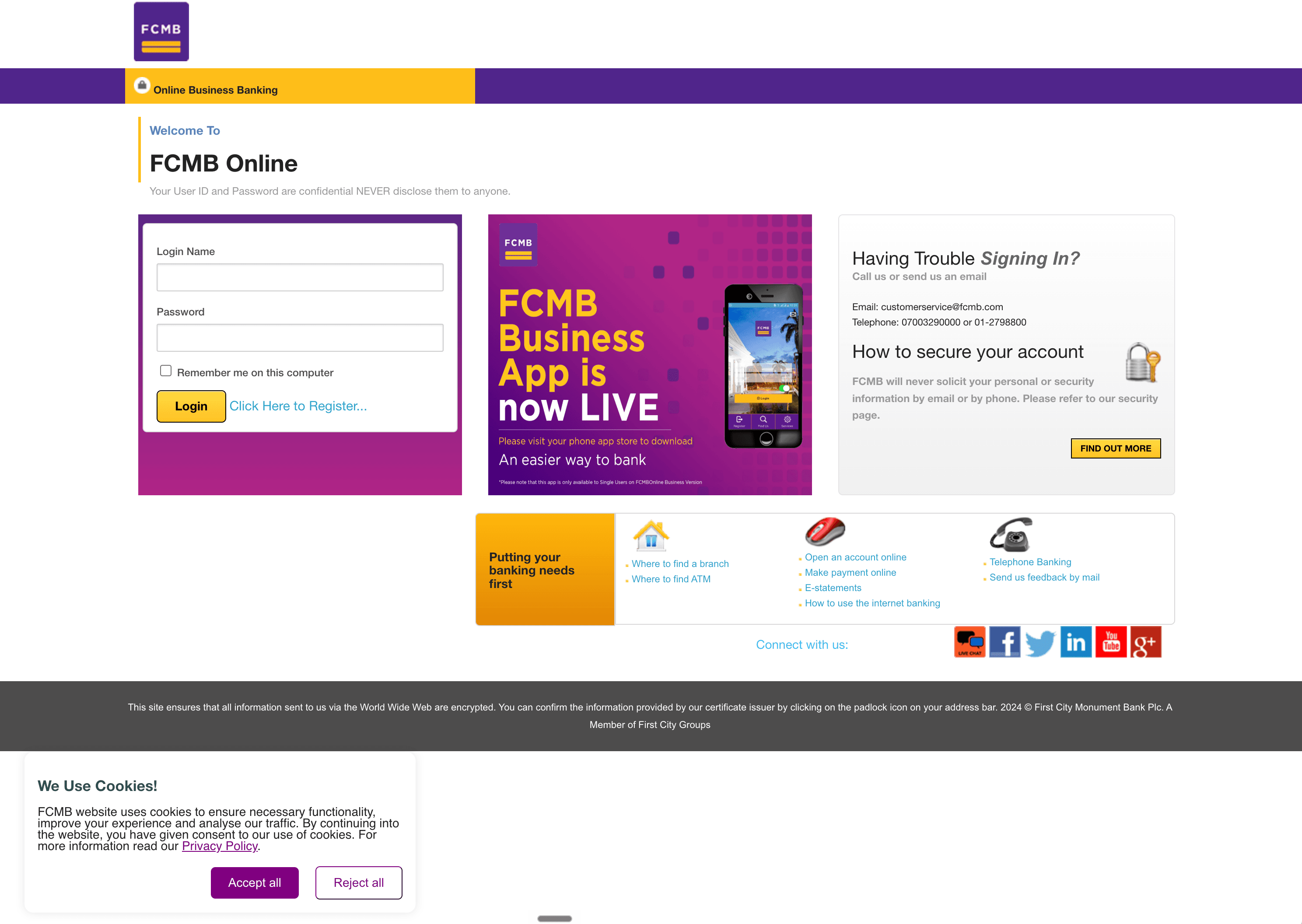
FCMB's corporate clients could sign in and look at their transactions. That was the platform. Opening an account meant physically walking into a branch, and onboarding took weeks. Authenticating on the app required a dedicated hardware token the bank had to issue you first.
02 · What we built
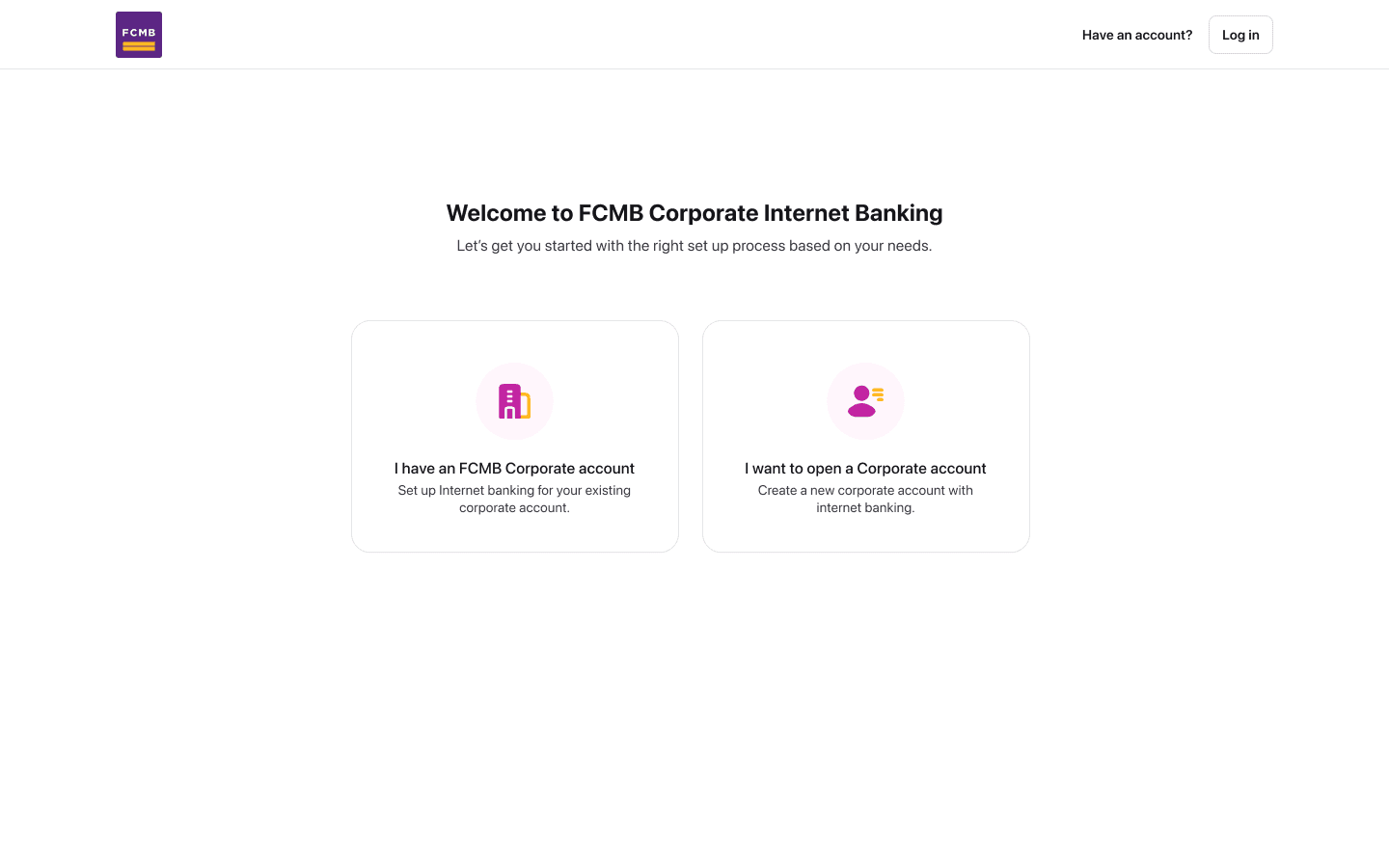
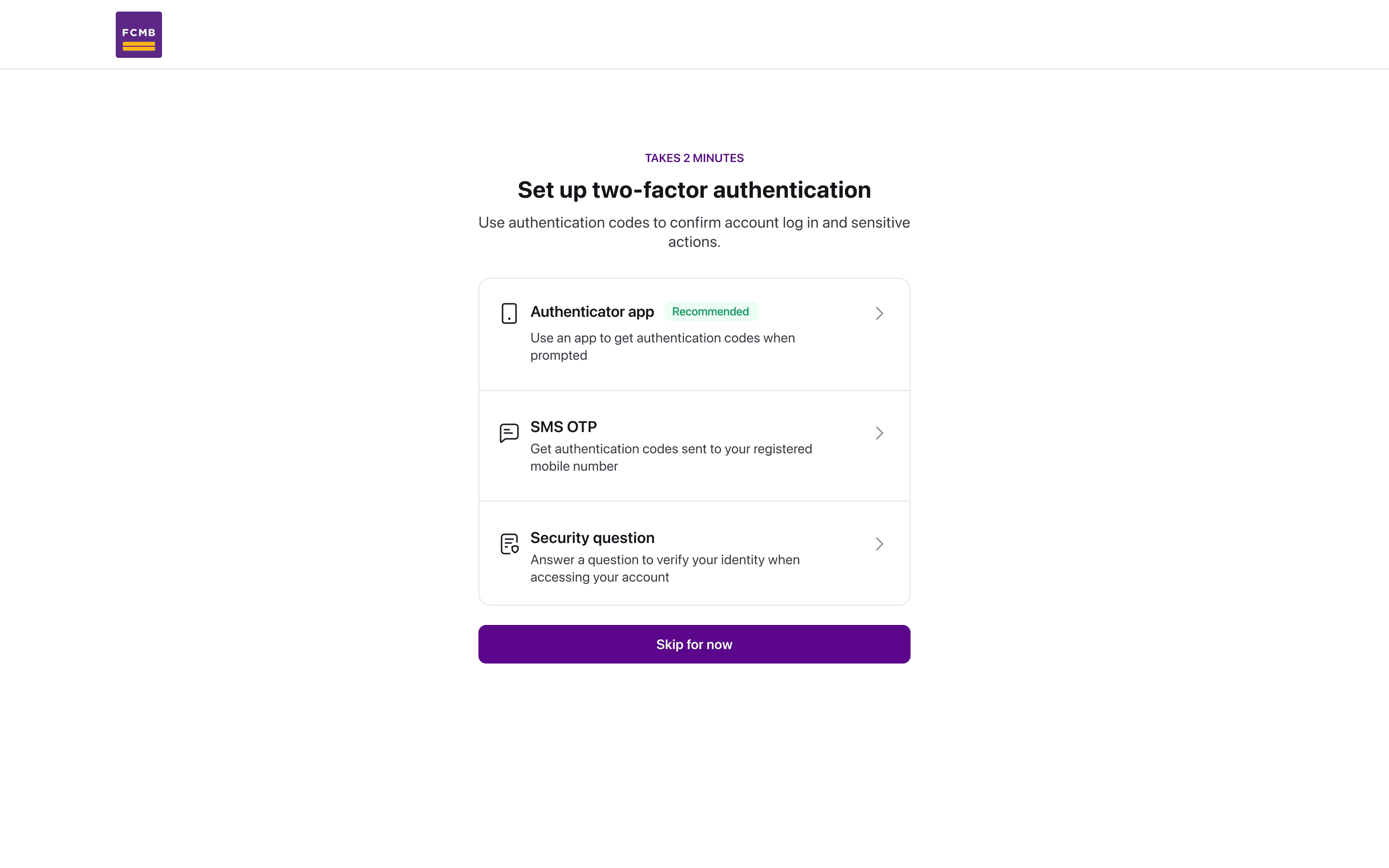
Corporate internet banking across two markets, from scratch: digital onboarding that removed the branch visit, TOTP authentication in place of hardware tokens, transfers with multi-party approval, bulk payments, payroll, FX and trade management, and team management for the people who actually operate a company's money. Onboarding time-to-value fell by 40%, and monthly transaction volume scaled from ₦200M at alpha to over ₦70B (about US$45M) within months of launch.
Working model · Product system
The platform served two markets and four user roles.
Market 01
Nigeria
Market 02
United Kingdom
Corporate banking platform
Shared platform
People doing different jobs
- Initiator
- Approver
- Treasurer
- Administrator
Core capabilities
- Digital onboarding
- Bulk payments
- Payroll
- FX + trade
- Team controls
- TOTP security
200,000+
SME + enterprise clients
₦70B+
Monthly volume at scale
−40%
Onboarding time-to-value
03 · Moving money
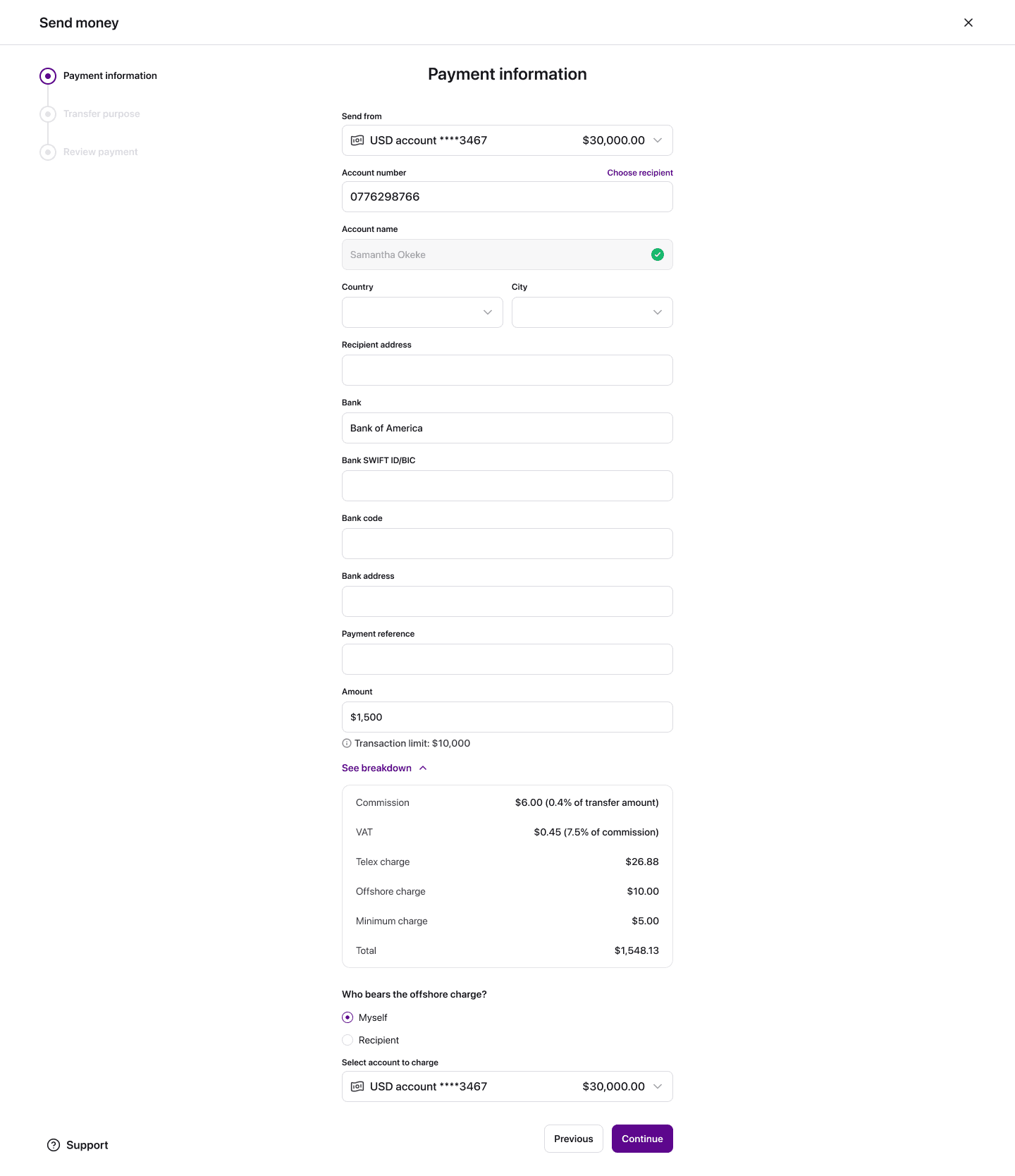
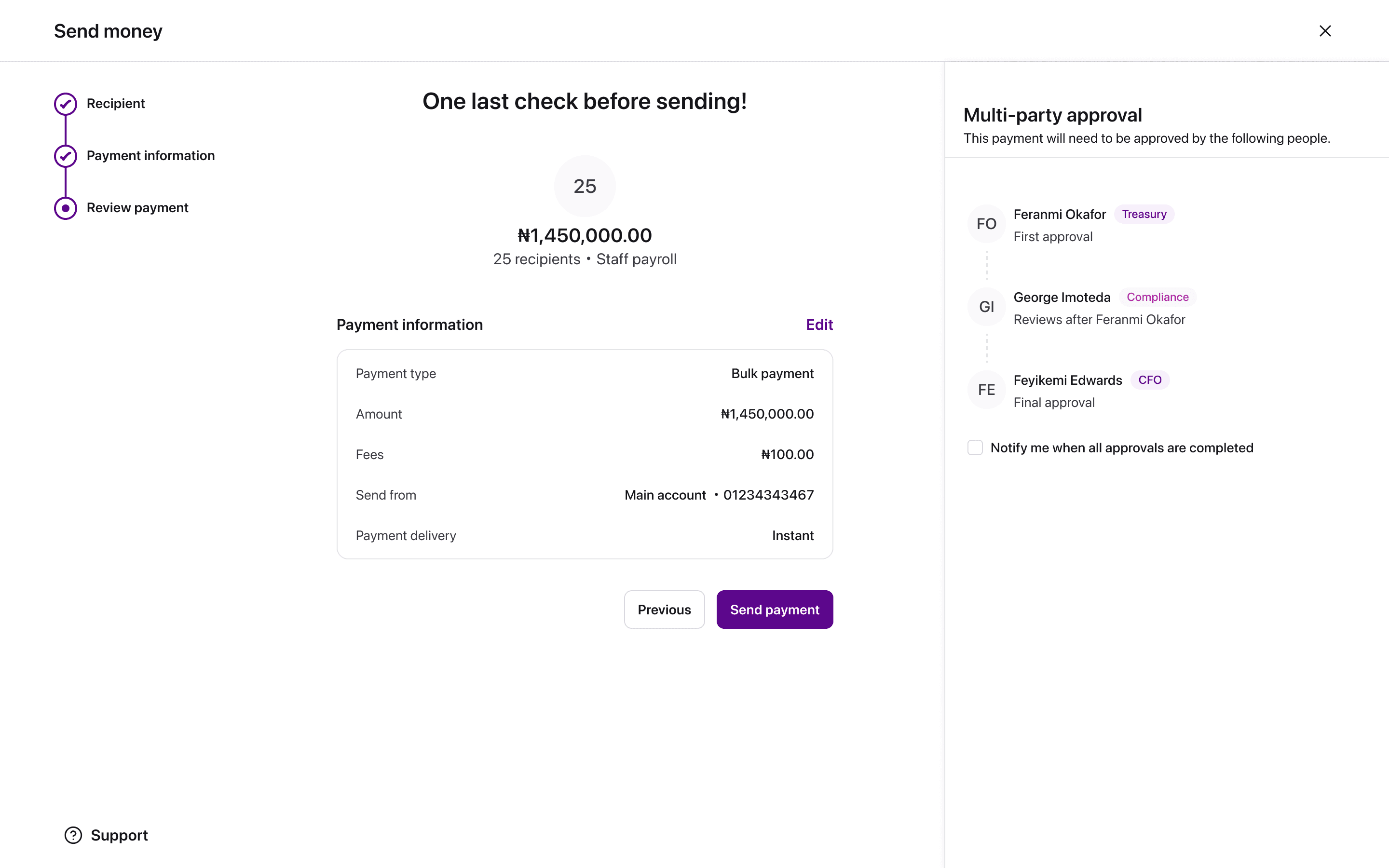
Corporate payments carry more weight than retail ones: higher values, FX legs, and several people who must agree before money leaves. The send-money flow shows every charge before you commit, down to who bears the offshore charge on an international transfer, and a bulk payment carries a whole payroll in one submission.
04 · Many personas
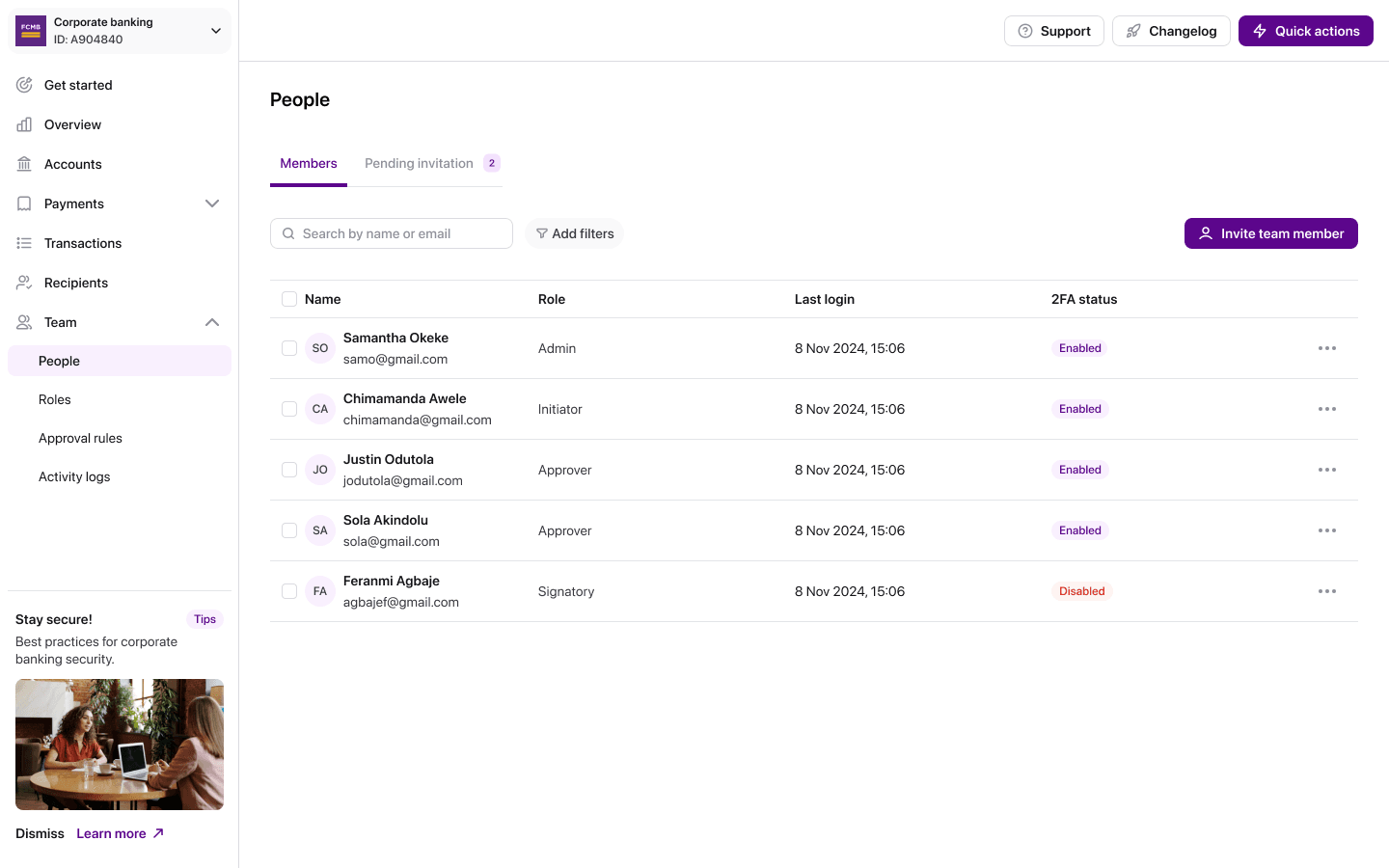
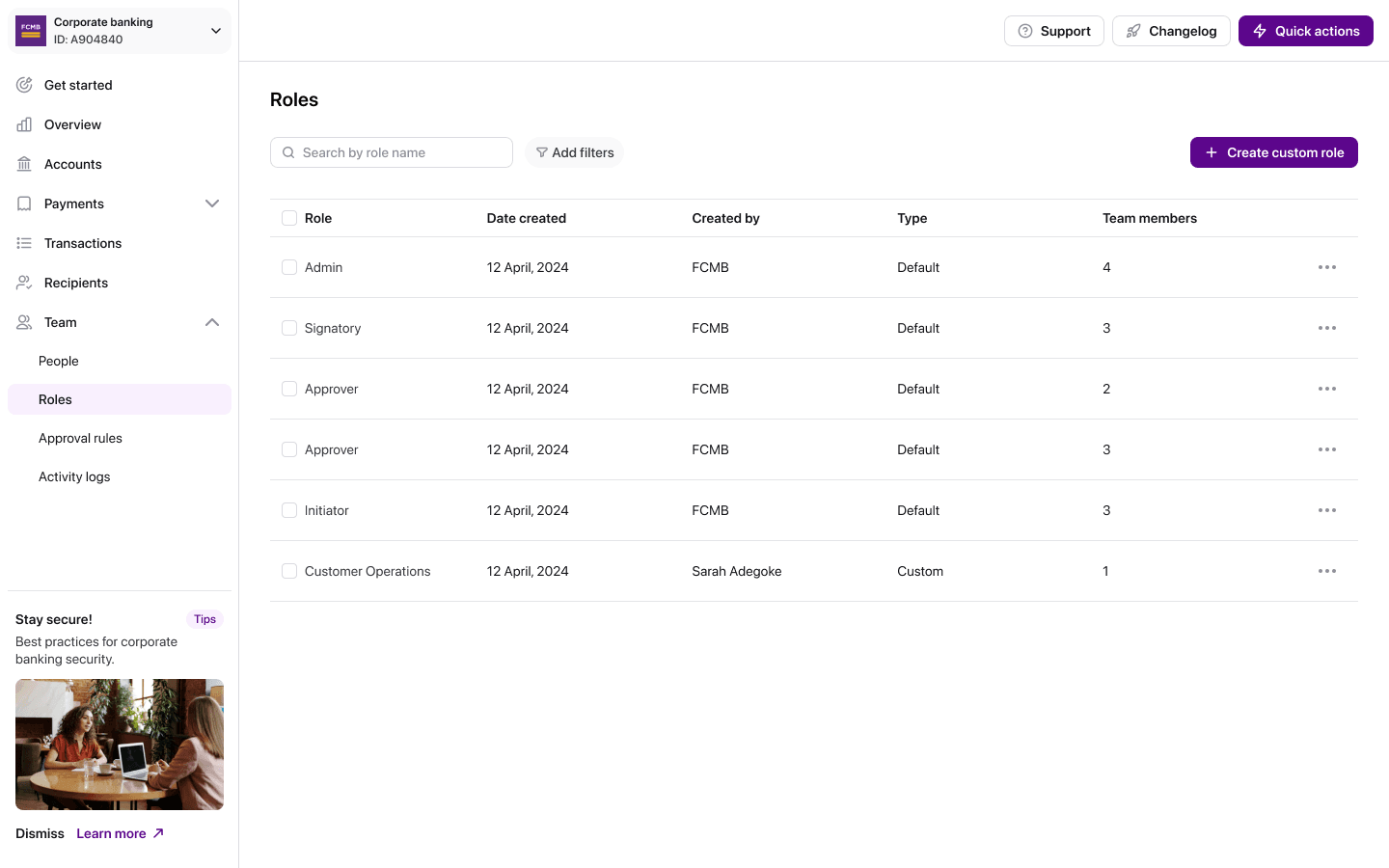
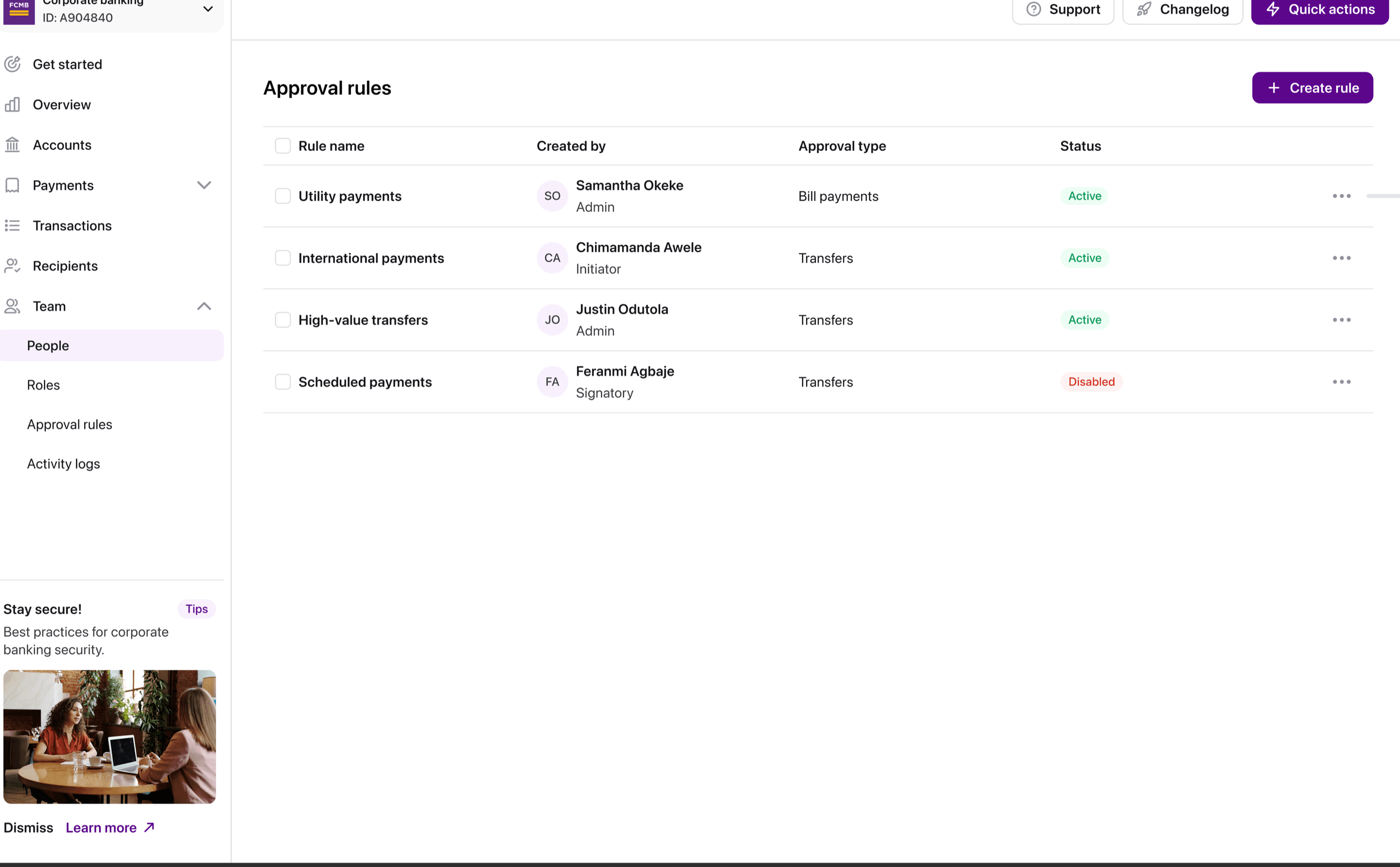
The platform served four roles with different permissions and responsibilities. Initiators create payments, approvers authorize them, treasurers monitor cash, and administrators control access. We designed team permissions, multi-party approvals, transaction PINs, and authenticator checks around those responsibilities.
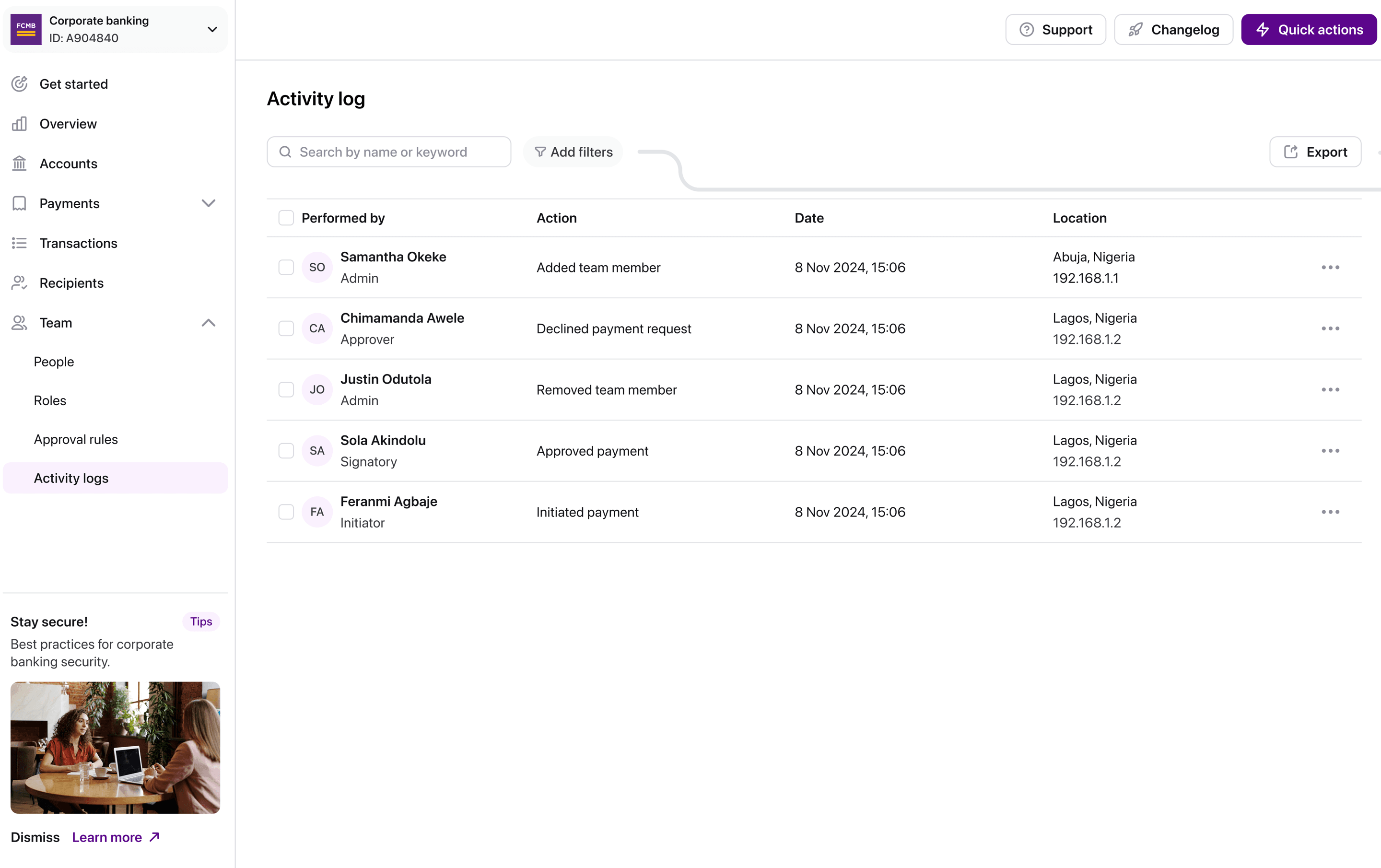
Governance is the half of corporate banking nobody sees in a screenshot of a transfer: who may act, what they may approve, and a record of everything they did.
05 · With design
Design and I worked side by side in Figma on the accounts home, statements, send-money flow, and transfer approval chain before a line of code was written. I mapped the workflow logic and built prototypes. Design turned those prototypes into the final interface.
The screens on this page are from those design files, shown with sample data.
In their words
“Femi is one of the most well-rounded people I know, deeply knowledgeable in his areas of expertise, yet endlessly curious about the things he isn’t. Come to any conversation with facts, because he’ll debate you fairly on anything.”
Open to new roles
Open to founding and senior product roles, Head of Product to Director, in Vancouver or remote across Canada.
If you are a founder with a first product still to ship, I design it end to end and build the first version with your engineers. If you run product at a scale-up or a bank, I take the regulated, operationally heavy workflows and make them feel simple.
Twenty minutes on a call is the quickest way to find out whether the fit is real. The calendar link books straight into my week.