Source: shutterstock.com
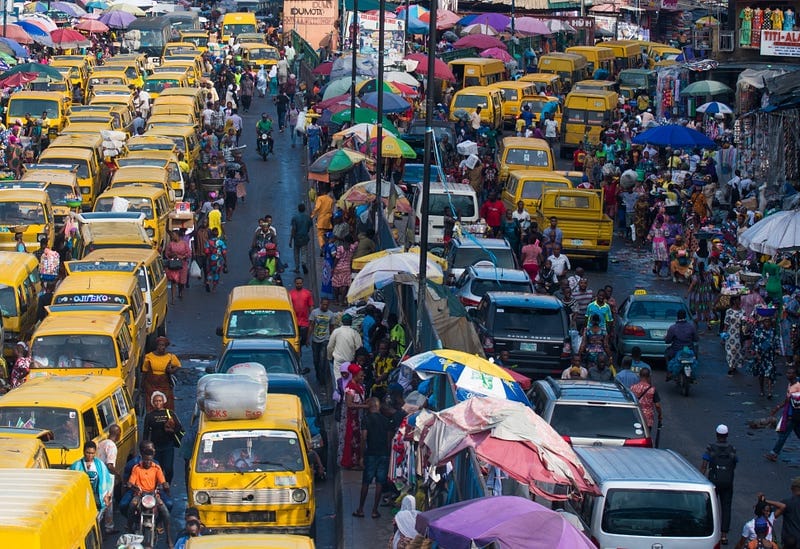
It would be an understatement to say, at this time, that Lagosians face terrible transport situations every day. As a matter of fact, the non-stop traffic — that is usually caused by nothing meaningful — is one of the things that have now characterized the very soul of the city we’ve all come to love. Everywhere you turn, there’s a traffic jam.
If you need to get to work on a Monday morning, there’s traffic; if your kids need to get to school, there’s traffic; If you have an important business meeting or even an interview to attend, there’s still traffic.
It’s so bad that people who work in Lekki, Ikoyi or Victoria Island cannot afford to live in places like Gbagada or Ogudu, not to mention Ikeja or Iyana-Ipaja, even though Lagos is a very small city that you ordinarily should be able to journey through entirely in about three hours. Those who do, risk losing hours (even years, when cumulated) that could have been productive, in traffic. As a matter of fact, those who only commute within the island or mainland still experience a lot of traffic. That is very appalling but we have come to accept it, at least until some meaningful government-supported solutions comes into effect.
The problem
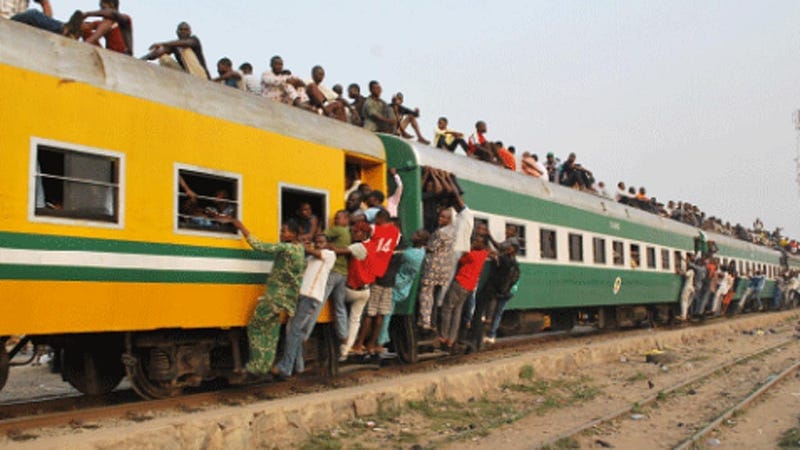
As terrible as the traffic situation is, it is often compounded by many other transportation-related issues. The biggest of them, of course, is the heavy reliance on roads. Tell me, when was the last time you used a train? And I certainly don’t mean those old, dilapidated ones that often move between Oshodi and Yaba Axis. Hopefully (and I’m not holding my breath), the government will fix the rail system and bring in new trains as promised.
Source: guardian.ng
The waterways are also largely underutilized, which is very shameful when you realize that Lagos is almost surrounded by waters, from lakes to lagoons and even the Atlantic ocean.
Now, not everyone can afford a car and even those who can, sometimes prefer to leave their cars at home and use alternative transport methods because, you guessed it, traffic. So, let’s talk about these existing alternatives, shall we?
For the upper-middle-class, who probably own cars anyway, and can afford to hire one when need be, we have taxi-hailing services. Some of these services now make it easy to book a ride by providing apps that have in-app payment options, and cars that are decently comfortable. There are still a few problems with these services though.
The first is the incessant complaints about the driver behaviours which, of course, is facilitated by the fact that you can’t help but interact with them. Because the routes are not fixed and not all the drivers know how to read maps, you may need to give directions. Also, some of them can be rude and unbearable when you’re speaking with them over the phone.
The bottom line is that the over-reliance on interaction with the drivers make it quite an inconvenient experience. Beside this is the unpleasant fact that the prices are unstable and are affected by weather, time, and worst of all, traffic (which is already our biggest challenge).
For those who can’t afford these taxi-hailing services, there are cheaper and similarly-automated options with bikes (Okada) instead of cars. Some of these services do well in providing decent apps and safety gear for the riders and service-users but as you probably already know, it also comes with its fair share of problems.
Top of the list is the “weather.” Whether it’s hot, cold, windy, sunny, rainy, etc, it doesn’t matter with bikes. All extremes affect you. Things then begin to get worse when the rider has no understanding of safety (some of those guys feel they have nine lives. Go cats!), hygiene (you remember there’s body contact, right?), no sense of direction and worst of all, no empathy for you the rider such that they ride without considering how their actions affect you. Let’s not forget that there are also those guys who don’t use any automation mechanism nor any safety measures for that matter, the real Okada riders, we hail o.
It’s safe to say, though, that traffic is not as bad with bikes (okadas), but at what cost? If they share the same problems identified with the car-hailing services and then others of their own, it may not be the best available option.
Now let’s talk about the VIP’s, the big boys, the ones whose reign has spanned multiple generations. For these, we should probably consider including yellow and black colours in the Nigerian national flag. The ones who started as mass-transit solutions but have eventually become the biggest problems on Lagos roads.
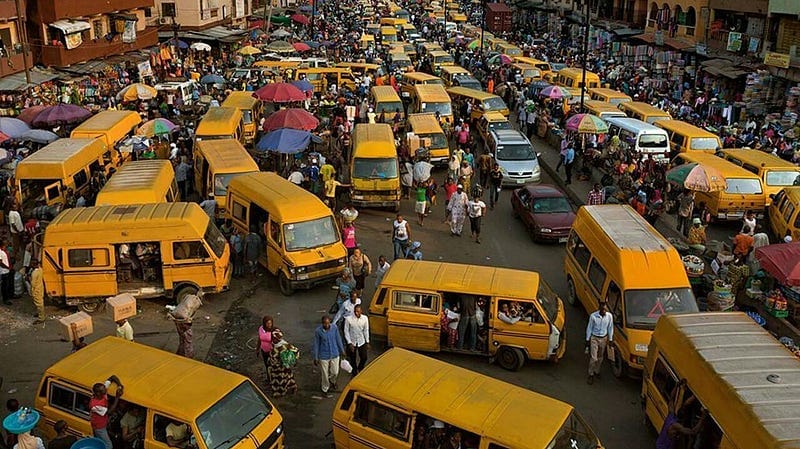
There’s no single person who has been in Lagos who doesn’t know the yellow buses. The Danfos, Molues, LTs, Fedecos & Faragons (yeah, I know it’s “Vanagon” but try telling that to the conductors at Oshodi), and more recently, the small buses. They are everywhere.
Source: 36ng.ng
Besides the price, which fluctuates at will, and the availability on almost every route, there’s nothing great about these guys. The seats are uncomfortable, the buses are worn out, the drivers and conductors are rude, they drive recklessly; the buses are in a state of disrepair, the list is endless.
It’s almost as if the state of the vehicles affect the passengers such that they begin to act like the buses.
Strangers sleeping on your shoulder (and probably drooling as well), shouting and fighting at times, preaching (I’m not against any religion, but…), even poking their noses into your business. Not a single person is happy about these buses and if I’m wrong, I’d like to meet those people.
The solution
Since the traffic situation doesn’t seem to have any end in sight, we have to adapt to it somehow. For that to happen, there has to be an affordable transport service, fixed in terms of pricing, convenient to use, comfortable to the best extent and safe.
Plentywaka
!
Recently, a Lagos-based startup called Plentywaka launched a bus-style ride-hailing tech service that aims to solve the above-outlined problems. Their solution is simple; they created an app that allows users to pre-order seats on comfortable buses that ply fixed routes, monitor the exact location of the bus every step of the way (this helps them plan their time), pay a fixed amount for their trip, and also select their drop-off location. All these are done without any interaction with the driver or vehicle assistants.
This rather ambitious startup takes on multiple problems and attempts to solve them with one service — the Plentywaka app.
For traffic, Plentwaka provides access to comfortable buses that can influence a decision to leave your car at home. I’d like to imagine that the more people that decide to leave their cars at home, the fewer cars there are on the road and consequently, the less traffic there is. This, however, would be largely determined by the number of buses that the Plentywaka service providers operate per route. If the buses are few, best believe solving the traffic problem is merely a pipe dream (not that I’d expect anyone but the government to solve this anyway). The fixed price is, at the very least, a good consolation because no matter how long you eventually spend in traffic, you don’t have to worry about extra charges.
Plentywaka does well in terms of safety, convenience and comfort. The app removes the need for the users to even wait at bus stops as they can monitor the exact time when the bus would arrive and then meet the bus there. Just like any other technology and data-driven solution that relies on digital maps technology like google maps, the timing may not always be accurate so the users may need to get to the bus stops 5 mins before the actual bus arrival. Nevertheless, this is, by far, better than any available bus-hailing solution out there.
There is this fare issue that seems to be the biggest challenge with the Plentywaka service. Currently, the prices are set far above what the regular buses plying these routes would charge. The big question is “Why should I pay two-times the amount I’d pay for bus fare, for Plenywaka buses?”. The answer to this simple: they are not the same.
Besides the fact that we’ve all come to recognize the many problems of safety, comfort and convenience that the regular buses come with, it’s expensive to provide quality service for anything whatsoever.
Recently, the government launched a 24-hour electricity project in Magodo GRA. As a result, their electricity bill increased by 113%. In this instance, the government tried to improve the production capacity of the electricity supplied to that area. That meant the government had to hire more personnel, buy new equipment, or apply new technology. No matter what they did to provide service, it will cost some extra money which would then be factored into the cost of the service.
This same reasoning applies to the Plentywaka solution. For the comfort, convenience and safety that is promised, extra cost will be incurred. That said though, I believe that the price can still be reviewed to reflect the realities of the target audience.
In the end, the solution proffered by the team at Plentywaka is a laudable initiative but it doesn’t immediately solve all the problems attached to transportation in the state. Who can blame them? Meaningful and lasting solutions take some time to develop and their solution is certainly a welcome development and a huge step in the right direction.
How to use
!
To use this service, all you need to do is download the app on Google Play Store or Apple App store, input your payment details and start booking your ride. I’ve personally used the app to book a ride and, although it’s still a little buggy (as almost all new software are), I was able to get the level of comfort and convenience promised by the service providers.
As with all things good, this solution also needs maintenance and I believe and hope that the team at Plentywaka will do a good job in that regard.